 Skyta Academy
Space Science & Astronomy
Human Biology in Space
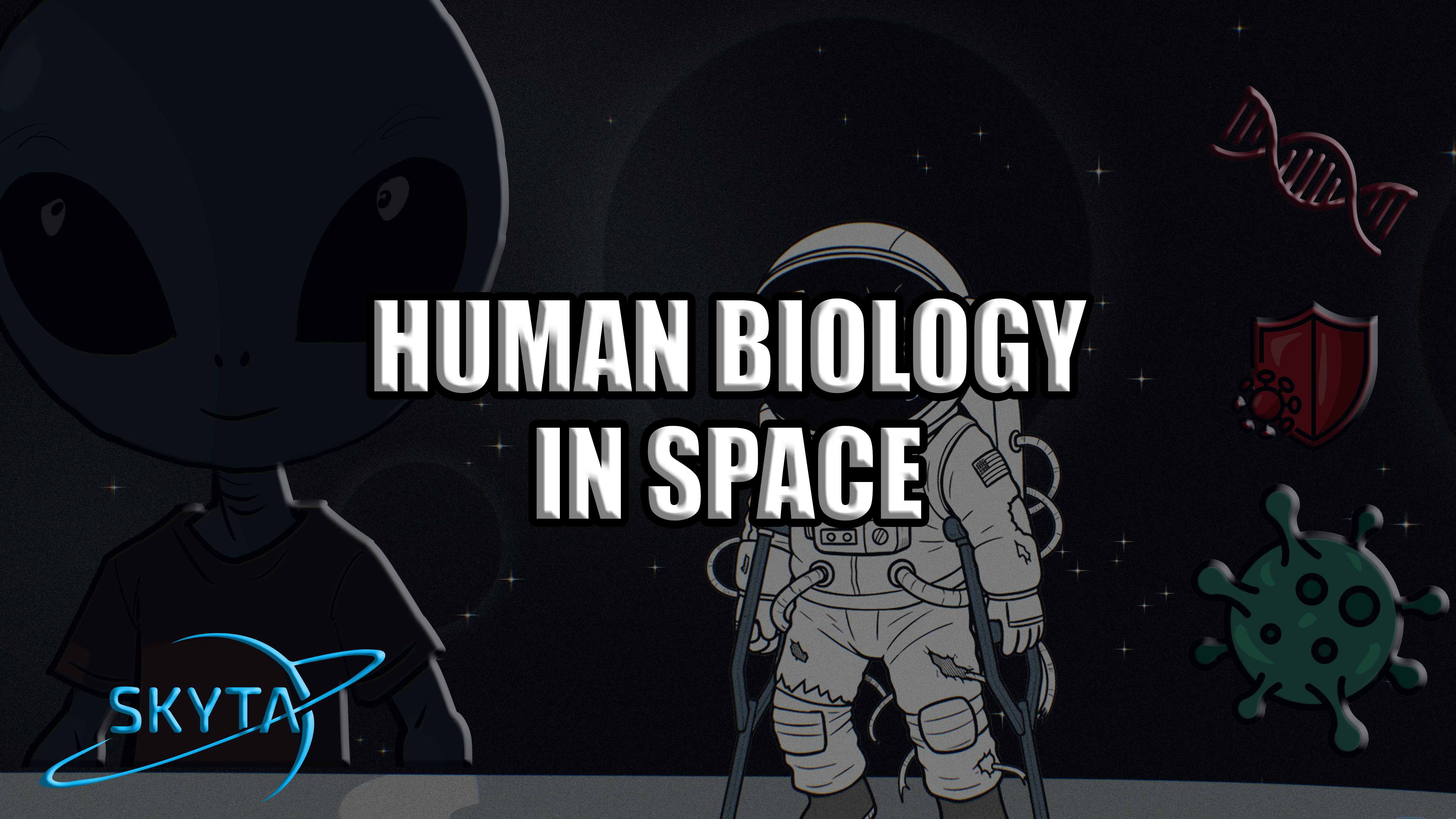
Skyta Academy’s Human Biology in Space teaches how microgravity reshapes body systems, drives muscle and bone loss, and disrupts immunity. You’ll learn how radiation damages DNA, how plants power closed loop life support, and what careers build mission health.
- Online, on demand
- All levels welcome
- Quizzes and XP progress
- Certificate on completion
About this course
This course transforms curious learners, STEM students, and future professionals into Space Biology Literacy leaders capable of thinking like mission health scientists.
In Human Biology in Space, you will move from foundational physiology to advanced space medicine challenges. You will study how microgravity reshapes the cardiovascular system, why muscle and bone loss occur at accelerated rates, how radiation damages DNA and increases long-term cancer risk, why the immune system becomes dysregulated, and how plants form the backbone of closed-loop life support systems for Mars missions. You will connect molecular biology, physiology, environmental systems, and mission engineering into one integrated framework. This is not a passive biology course. It is systems-level training in how to keep humans alive beyond Earth.
By the end of this course, you will think in terms of risk thresholds, countermeasures, ecosystem closure, repair pathways, and mission readiness. You will complete quizzes, earn XP, finish a career exploration activity, and receive your CCU Certificate aligned with U.S. STEM biology standards for K–8, K–12, and community college learners.
Course Structure
6 Modules, Quizzes, XP Progression, Career Exploration Activity, CCU Certificate
Episode Outline
Module 1: Microgravity & Body Systems
Module 2: Muscle & Bone Loss in Microgravity
Module 3: Radiation Biology & DNA Damage
Module 4: Immune System Changes in Microgravity
Module 5: Plant Biology & Life Support Ecosystems
Module 6: Space Medicine & Biology Careers
Who Is This Course For?
K–12 Students (Grades 6–12) building real scientific thinking through space systems
Community College & STEM Students preparing for biology, medicine, engineering, agriculture, or research careers
Aspiring Space Professionals interested in astronaut health, life support, and human performance
Health, Data, and Risk-Focused Learners who want to understand biology through mission readiness and safety
Career Switchers exploring entry points into the expanding space life sciences industry
What You’ll Learn
Microgravity Physiology: Fluid shifts, cardiac remodeling, vestibular recalibration, circadian disruption
Musculoskeletal Adaptation: mTOR signaling, muscle atrophy pathways, osteoblast/osteoclast balance, calcium risk chains
Radiation & DNA Protection: Ionizing radiation physics, ROS damage, DNA repair systems, Mars dose modeling, shielding design
Space Immunology: T cell suppression, NK cell changes, viral reactivation mechanisms, microbiome adaptation, HPA axis stress effects
Bioregenerative Life Support: Photosynthesis systems, hydroponics vs aeroponics, gravitropism loss, closed-loop architecture, Mars greenhouse constraints
Risk & Countermeasure Thinking: Exercise protocols, nutrition design, pharmacology concepts, layered mission protection
Space Career Strategy: Education roadmaps, skill stacks, internships, and long-term planning
Questions learners ask
Do I need a science or engineering background to take Human Biology in Space?
No. Every Skyta course is open to all levels. Lessons start from the basics and build up, with quizzes to check your understanding as you go.
How do I take the course?
Online, in the Skyta Academy portal, on your phone, tablet or computer. Create an account, open the course and learn at your own pace.
Do I get a certificate?
Yes. When you complete the course you earn a CCU certificate, issued through Skyta’s certification partnership with Cornerstone Christian University (CCU).
How much does it cost?
Individual learners get full access with a Skyta plan from $14.99 a month, and schools and organizations can get group plans. See the pricing page for current plans.
More Skyta courses
Ready to start Human Biology in Space?
Learn online at your own pace with Skyta Academy.