 Skyta Academy
Space Science & Astronomy
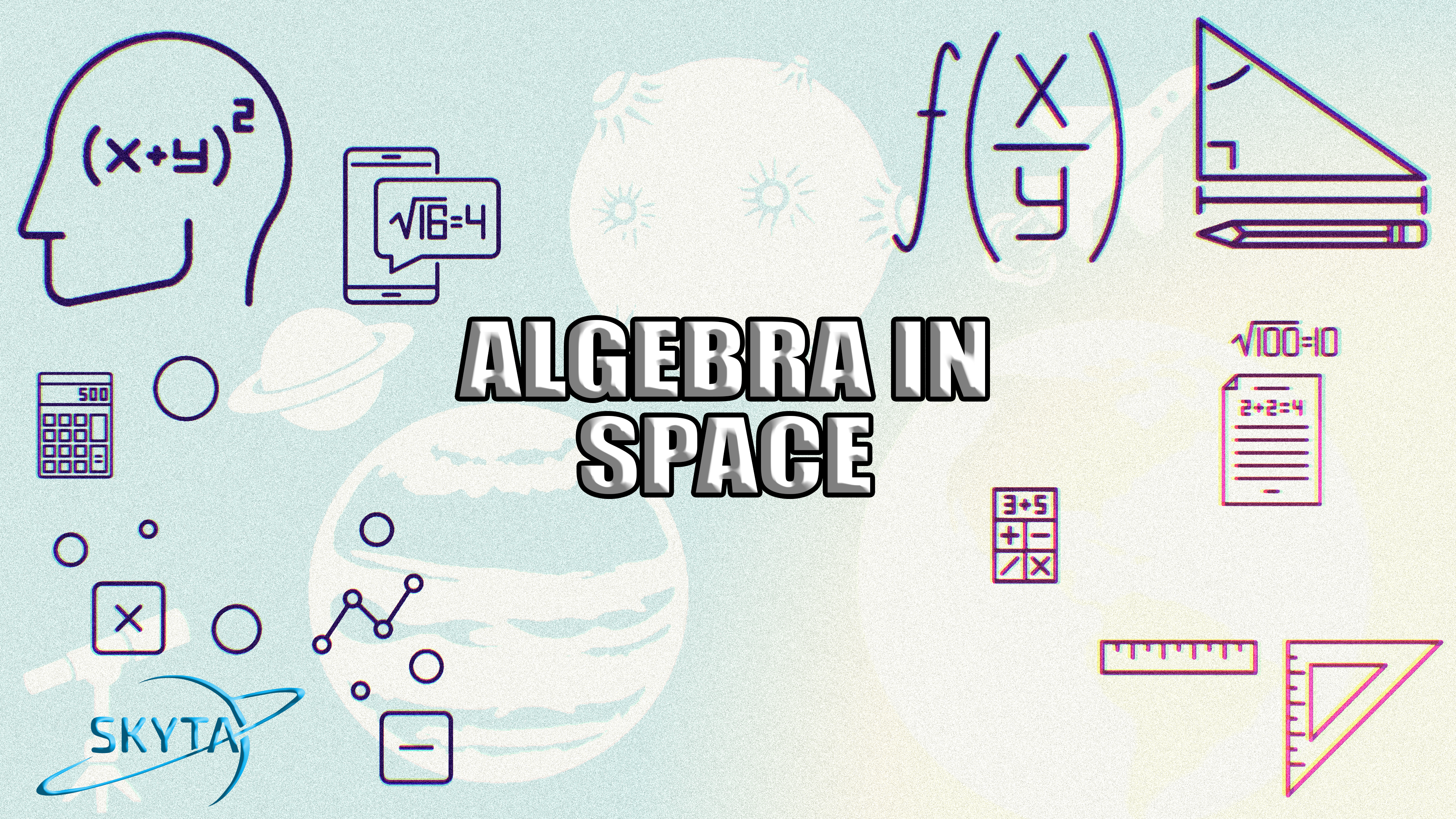
Algebra in Space
Learn how algebra powers real satellite motion, orbit planning, mission constraints, and safe engineering decisions in space.
- Online, on demand
- All levels welcome
- Quizzes and XP progress
- AI tutors Felix and Jenny
- Certificate on completion
About this course
This course transforms learners into confident mathematical modelers by teaching the core principles of algebra through authentic space systems and orbit planning scenarios. Guided by Felix and Jenny, learners move from defining variables and using correct units to building linear models, interpreting curved relationships, solving systems of equations, and designing complete mission plans using algebraic reasoning.
By the end of the course, learners will be able to model real orbital situations with precision, interpret equations in meaningful physical terms, and apply algebraic thinking to engineering-style decisions in space exploration. The course builds both mathematical fluency and analytical judgment, showing how algebra helps mission teams predict motion, check constraints, reduce errors, and plan safe satellite operations.
Course Structure
5 Modules, Quizzes, XP Progression, CCU Certificate
Episode Outline
Variables and Units in Orbit Problems
Build the mathematical foundation for space systems by learning how variables represent measurable orbital quantities such as time, distance, speed, radius, and altitude. Practice unit conversions, dimensional analysis, and algebraic expressions while developing the precision needed to avoid mission-critical errors in calculations.
Linear Relationships from Orbit Motion and Telemetry
Explore how linear equations help mission teams model steady motion, interpret telemetry, and make predictions. Learn how slope represents rate of change, how intercepts reveal starting values or sensor bias, and how algebraic models are used to solve for unknown time, distance, and calibrated measurements.
Quadratic and Polynomial Models: Energy and Trajectory Shape
Move beyond straight lines to study how curved relationships describe orbital motion and energy. Connect conic sections to orbit shape, examine the meaning of squaring in physical equations, and use the vis viva equation to understand why satellites move faster at lower altitudes and slower farther from Earth.
Systems of Equations: Rendezvous and Navigation Constraints
Learn how multiple mission conditions can be solved together using systems of equations and inequalities. Apply substitution and elimination to find rendezvous points, interpret intersections as shared solutions in time and space, and use algebraic constraints to evaluate whether a mission plan is safe and feasible.
Functions and Modeling Capstone: Design a Safe Orbit Plan
Complete the course by acting as a mission analyst and building a full orbit recommendation from start to finish. Define variables, compute orbital radius and speed, compare two mission options, apply constraints, and communicate a justified engineering recommendation using equations, units, assumptions, and clear reasoning.
Who Is This Course For?
K–12 Students (Grades 6–12) who want to learn algebra through exciting real-world space and satellite examples.
STEM Students and Graduates preparing for studies or careers in aerospace, engineering, physics, mathematics, or mission analysis.
Space Enthusiasts who want to understand how algebra is used to describe motion, orbits, and decision-making in space exploration.
Future Analysts and Problem Solvers who want to build practical modeling skills and apply mathematics to real scientific and engineering challenges.
What You’ll Learn
Variables and Quantities: Define variables for orbital time, distance, speed, radius, and altitude using correct scientific meaning.
Units and Conversions: Convert units accurately and use dimensional analysis to verify equations and prevent calculation errors.
Linear Modeling: Build and interpret linear equations to describe satellite motion, telemetry, and rate of change.
Slope and Intercepts: Explain slope as a physical rate and interpret intercepts as starting values or sensor bias.
Curved Relationships: Understand how quadratic and polynomial relationships appear in orbit shape, energy, and motion.
Orbit Shape Analysis: Relate semi-major axis and eccentricity to circular, elliptical, parabolic, and hyperbolic trajectories.
Orbital Speed Reasoning: Use algebraic forms of orbital equations to explain why satellites move faster when closer to Earth.
Systems of Equations: Solve simultaneous conditions using substitution and elimination in rendezvous and navigation problems.
Constraints and Inequalities: Represent operational limits such as altitude floors, speed caps, separation distance, and fuel limits mathematically.
Mission Modeling: Build complete algebraic models for orbit planning, compare options, and justify safe engineering decisions with evidence.
Scientific Communication: Present results with clear equations, correct units, stated assumptions, and reasoned recommendations.
Analytical Decision Making: Use algebra as a tool for prediction, validation, and mission planning in real space systems.
Questions learners ask
Do I need a science or engineering background to take Algebra in Space?
No. Every Skyta course is open to all levels. Lessons start from the basics and build up, with quizzes to check your understanding as you go.
How do I take the course?
Online, in the Skyta Academy portal, on your phone, tablet or computer. Create an account, open the course and learn at your own pace.
Do I get a certificate?
Yes. When you complete the course you earn a CCU certificate, issued through Skyta’s certification partnership with Cornerstone Christian University (CCU).
How much does it cost?
Individual learners get full access with a Skyta plan from $14.99 a month, and schools and organizations can get group plans. See the pricing page for current plans.
More Skyta courses
Ready to start Algebra in Space?
Learn online at your own pace with Skyta Academy.